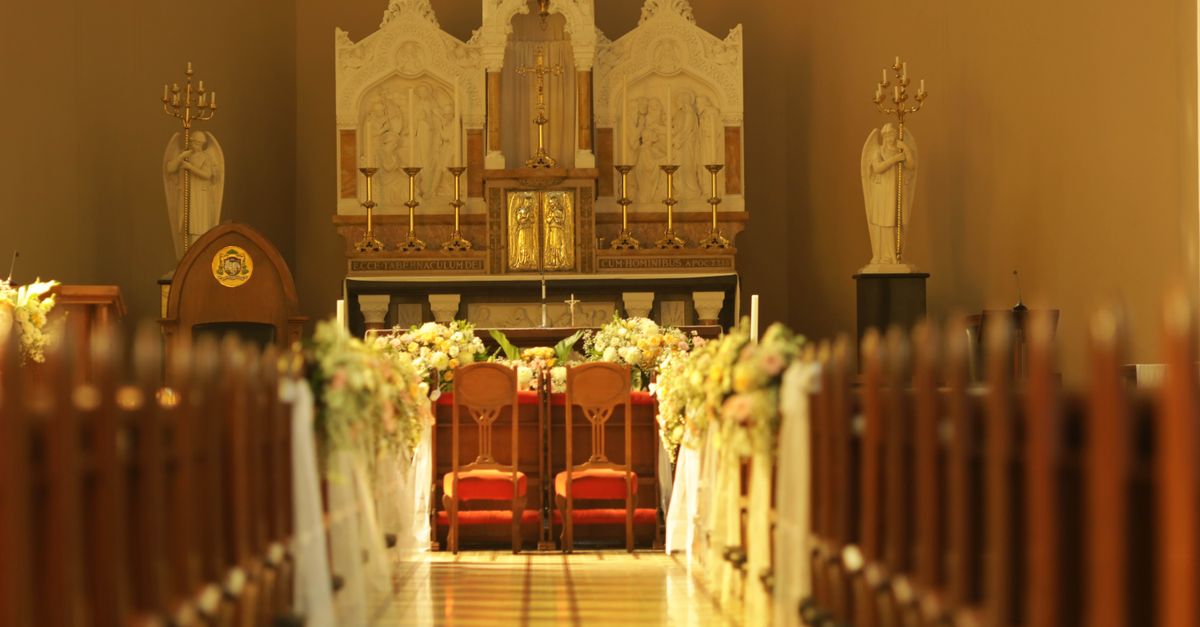
I've been talking with a church about their wedding ministry. It's a genuine community service. Couples walk through the doors at one of the biggest moments of their lives, and that opens up conversations about relationships, faith and meaning, the real stuff of life. It's also an important part of the church's income.
They run more than 40 weddings a year, and in a big year close to double that. Spending comes to nearly half of wedding income, and almost all of it is labour. That figure also doesn't count everything a wedding actually uses, so once those costs are added in, the real margin is a lot thinner than the headline number suggests.
Something that busy, with that much income, should make the church real money. Right now, too much of it goes on the effort of keeping it running.
Where the hours go
Every wedding moves through the same stages: the enquiry and a check that the date is free, the booking and payments, the forms and paperwork, and coordinating everyone involved on the day. Almost all of it runs on email.
That has three costs that compound:
- The same details get typed in again and again. Names, dates and contact details move from an email into the booking book, into a form, into an invoice, into another email.
- Things go stale or go missing. A form sent out months early is out of date by the time the wedding comes round. A booking can sit in an inbox and nowhere else.
- The source of truth is people's memory. No single place says where each wedding is up to. The team knows, collectively, so staff have to keep checking in with each other on every job to stay in sync.
That last one is the expensive one. Every check-in is staff time, on every job. It's not the weddings that cost the most to run. It's the coordination around them.
One phone call
Here's what that looks like when it goes wrong.
A staff member took a booking, and before they'd written it into the book, the phone rang. By the time the call was over, the booking had slipped. Two other weddings were then booked for the same weekend. When the missing one surfaced, the only option was to squeeze it in back to back with one of the others. That caused problems with parking and with moving guests around the grounds, on a day where both couples deserved better.
Nobody did anything unusual there. People get interrupted. A process that only works if nobody is ever interrupted between "yes, that date is yours" and "it's in the book" is going to fail eventually, and at 40 to 80 weddings a year, eventually doesn't take long.
One record per wedding
We're early in the conversation, so I'm not going to name tools here. The tools matter less than the design, and the design is the part that's easiest to skip. Fixing the process comes before automating it.
For a wedding ministry, a good design starts with one record per wedding, and that record is the single source of truth:
- An enquiry creates the record directly. The date is checked against every other booking at that moment, and held the moment it's confirmed. No gap for a phone call to fall into.
- The calendar is built from the records, not kept alongside them. If it's not in the system, it's not booked, and everyone knows that.
- Each record moves through clear stages, from enquiry to after the wedding, so anyone on staff can see what's done and what's next without asking.
- Forms, reminders and invoices come from the record. Details are entered once, and what goes out is current because it's generated when it's needed, not months ahead.
- The steps are written down. A short standard operating procedure means the process doesn't depend on whoever has been there longest.
None of this is exotic. It's business systems integration and workflow automation applied to something the church already does well. Once the details live in one place, most of the coordination emails aren't needed any more, and that's where the labour cost can come down.
What the job actually is
By day I'm a systems and automation engineer. Through sevasek I work as an AI automation consultant. Conversations like this one are why I do both.
The tech is ready. The tools for this kind of system are mature, and our understanding of how to design an information system has come a long way. Cost and capability aren't the bottleneck any more. The bottleneck is being willing to redesign how the work flows, instead of adding another inbox rule on top of the old way.
Change sticks when the people own it. A new system that staff don't trust gets quietly worked around, and then you have two sources of truth instead of one. Most of the real work is with the people: understanding how they actually do the job, designing with them rather than for them, and making sure the new way is easier than the old one from day one. My background in operations and pastoral leadership matters as much here as the code does.
What gets me excited is helping an organisation take its systems to the next level so it can scale, and spend its time on the thing it does that nobody else does. For this church, that's weddings that are well run, and the conversations those weddings make room for.
If your organisation runs on email and memory too, a Systems Health Check is the place to start.